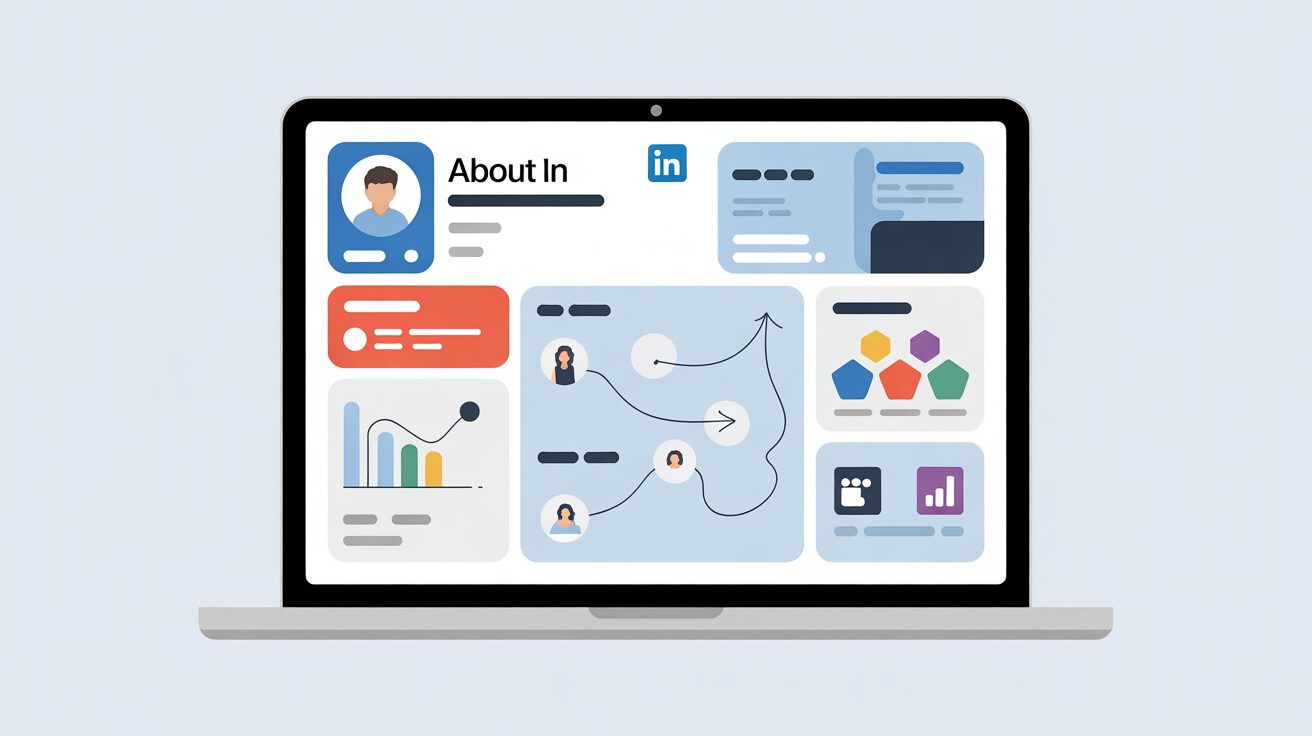
Writing an Engaging LinkedIn ‘About’ Section
Your “About” section isn’t a résumé. It’s not a robotic list of accomplishments or a dry recap of your career history.
It’s a chance to hook people, show personality, and make them want to connect.
A weak summary makes you forgettable. A strong one builds authority, trust, and interest.
If your current “About” section is a stiff, third-person bio or a vague paragraph filled with buzzwords, it’s time to rewrite it.
A great LinkedIn summary starts with a compelling first sentence. Most people won’t click “See More” unless the first few lines grab their attention.
Don’t waste that space with “I’m an experienced professional with a demonstrated history in X industry.” That tells people nothing.
Instead, start with a bold statement, a question, or a short, engaging line that speaks directly to your audience.
If you solve a specific problem, lead with that. “Most businesses struggle to turn LinkedIn connections into clients. I help them fix that.”
If you want to take a storytelling approach, open with a personal experience.
“Five years ago, I walked into my first sales job with zero experience and had to figure everything out the hard way. Now, I teach others how to shortcut that learning curve.”
Your summary should be written in first-person, not third-person. “John is a results-driven professional” sounds cold and impersonal.
“I help B2B brands generate more leads using LinkedIn without paid ads” sounds natural and engaging.
LinkedIn is about relationships, and no one wants to connect with someone who sounds like a corporate press release.
Instead of listing credentials, show people how your experience benefits them.
You’re not just an expert in your field—you help people solve a problem, grow their business, or improve their results.
Shift the focus from yourself to your audience. If you’ve worked in your industry for 10+ years, what insights have you gained that can help others?
If you’ve helped dozens of clients, what common mistakes have you seen, and how do you fix them? If you’ve built a successful business, what lessons can you share?
Your summary should also include a few key credibility markers.
If you’ve been featured in major publications, worked with top brands, or generated impressive results, highlight that.
But keep it relevant. “I’ve helped 100+ businesses increase their LinkedIn engagement by 300% in six months” is specific and compelling.
“I have a strong work ethic and a passion for marketing” is generic and forgettable.
Keep your paragraphs short and easy to read. A massive block of text overwhelms people and makes them scroll past. Break it up into sections so it’s easy to skim.
End with a clear call to action.
What do you want people to do after reading your summary? Should they connect with you, visit your website, send you a message, or book a call?
Make it clear and easy. “If you’re looking to generate more leads through LinkedIn, send me a message—I’d love to connect” is far better than leaving people guessing what to do next.
Your LinkedIn summary should make people want to engage with you. It should feel personal, natural, and valuable.
If it sounds like a generic corporate bio, it’s not doing its job.
Rewrite it today with storytelling, personality, and a clear call to action, and you’ll instantly make your profile more engaging and effective.





Post a Comment